The trolley problem is a classic thought experiment in ethics that forces a choice between two bad outcomes: allowing a larger tragedy to happen through inaction, or actively causing a smaller tragedy to prevent it.
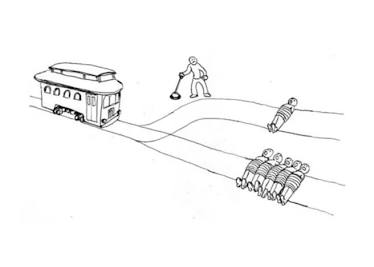
The Classic Scenario
Introduced by philosopher Philippa Foot in 1967, the scenario works like this:
- A runaway trolley is barreling down the tracks toward five people who are tied up and cannot move.
- You are standing next to a lever. If you pull it, the trolley will switch to a side track.
- However, one person is tied to that side track.
- You have two options: do nothing and let five people die, or pull the lever, actively diverting the trolley to kill one person instead.
The Two Core Ethical Frameworks
The problem highlights a fundamental clash between two major schools of moral philosophy:
| Framework | Choice | Core Reasoning |
| Utilitarianism | Pull the lever | Morality is judged by outcomes. Saving five lives at the cost of one produces the greatest good for the greatest number. |
| Deontology | Do not pull the lever | Morality is judged by rules and duties. Actively killing an innocent person is inherently wrong, even if it leads to a better net outcome. |
Why It Matters Today
While the scenario itself is artificial, it serves as a foundational model for real-world dilemmas involving unavoidable harm—most notably how engineers program autonomous vehicles to make split-second crash decisions, as well as how doctors and policymakers allocate scarce medical resources during crises.