Natural Resources of Tripura Paragraph
Natural Resources of Tripura Paragraph is going to discuss if you want to know a similar type of paragraph, please stay with us. Let’s move on…..
Tripura is a state in Northeast India that is rich in natural resources. The state is blessed with an abundant supply of timber, bamboo, and other forest products, making it an important center for the forest-based industry. Timber and bamboo are used for a variety of purposes, including construction, furniture making, and paper production.
Tripura is also known for its rich mineral resources, including coal, natural gas, limestone, and iron ore. The state has significant reserves of coal and natural gas, which are essential for power generation and industrial development. Limestone is used as a raw material in the production of cement and iron ore is used in the steel industry.
In addition to its mineral and forest resources, Tripura is also home to rich agricultural land and abundant water resources. The state has fertile soil and favorable climate conditions, which are ideal for agriculture and horticulture. Rice, jute, sugarcane, rubber, and a variety of fruit and vegetables are grown in Tripura, providing important sources of income for the state’s farmers.
Finally, Tripura is also known for its rich cultural heritage, including its unique music, dance, and handicrafts. These cultural resources are an important part of the state’s tourism industry and attract visitors from around the world. The government is working to promote and preserve these cultural resources, as well as to develop the tourism industry, in order to create economic opportunities and improve the quality of life for the state’s citizens.
In conclusion, Tripura is a state that is rich in natural resources, including timber, minerals, agricultural land, water resources, and cultural heritage. These resources are critical to the state’s economic development and play a crucial role in improving the quality of life for its citizens. The government is working to protect and preserve these resources, while also promoting their sustainable development, in order to build a better future for all.
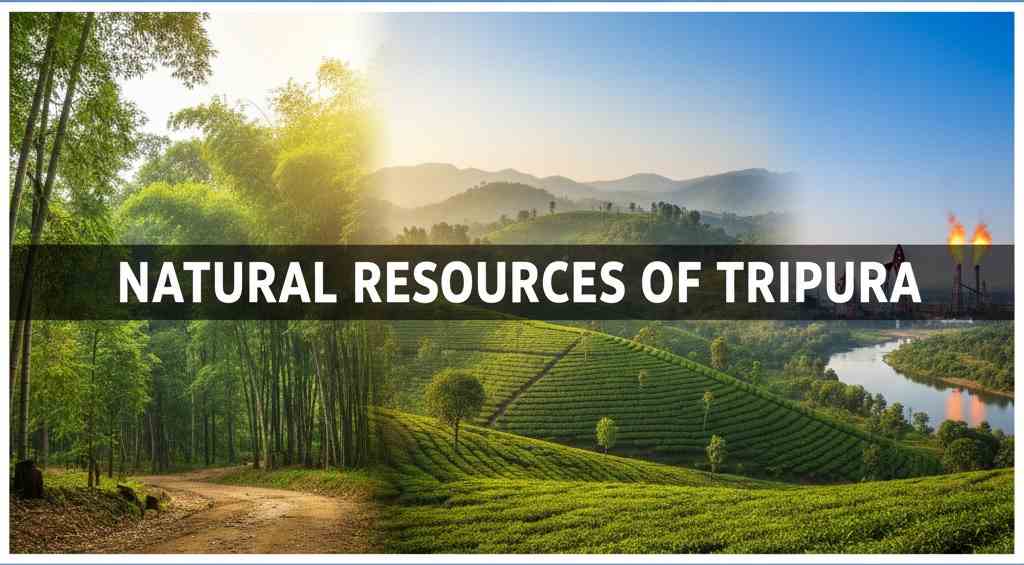
Natural Resources of Tripura Paragraph:
In conclusion, Tripura is a state exceptionally rich in diverse natural resources that form the backbone of its growing economy. Its most significant asset is its vast reserves of high-quality natural gas, which power major thermal plants and offer massive industrial potential. Beyond minerals, the state is a lush landscape where forests cover nearly 60% of the land, providing an abundance of bamboo, timber, and over 260 species of medicinal plants.
Tripura’s fertile soil and tropical climate also make it a leader in the primary sector. It is the second-largest producer of rubber in India and maintains a flourishing tea industry with over 50 estates. Additionally, the state’s diverse topography, featuring five major hill ranges and numerous rivers like the Gomati and Manu, supports extensive agriculture, particularly in rice and exotic fruits like the Queen Pineapple. As we move into 2026, the sustainable management of these resources—balancing industrial growth in natural gas with the preservation of its rich biodiversity—remains crucial for the state’s prosperity and its role as a “Gateway to Southeast Asian economies.”
Frequently Asked Questions
1. What are the primary natural resources that define Tripura’s economy?
Tripura’s natural resource base is a diverse mix of subterranean minerals and surface-level biological wealth. The “big four” resources that define the state are Natural Gas, Rubber, Bamboo, and Forests. Natural gas serves as the industrial engine, powering thermal plants and providing a cleaner energy source for the region. On the surface, Tripura is India’s second-largest producer of natural rubber, a commodity so vital it’s often called “White Gold.” Bamboo, or “Green Gold,” is culturally and economically inseparable from the state, with over 21 species used for everything from food to high-end furniture. Additionally, the state’s fertile soil supports a thriving tea industry and a variety of horticultural crops like pineapple and jackfruit. This combination of mineral and biological assets creates a unique economic profile that balances traditional tribal practices with modern industrial aspirations, though the state continues to work on better value-addition for these raw materials.
2. How significant is Natural Gas as a mineral resource in Tripura?
Natural gas is arguably Tripura’s most critical mineral resource, found primarily in the Assam-Arakan Fold Belt. Unlike many other regions where gas is found alongside oil, Tripura’s gas is “non-associated,” meaning it is remarkably pure, with a methane content of nearly 97%. This purity makes it an ideal fuel for power generation and industrial use. The Oil and Natural Gas Corporation (ONGC) has identified 11 major gas fields, including Baramura, Rokhia, and Konaban. The gas reserves are estimated to be massive, though only a portion is currently being tapped. This resource has allowed Tripura to become a power-surplus state, exporting electricity to neighboring Bangladesh. The availability of concessional gas also offers a significant competitive advantage for setting up gas-based industries, such as urea plants or methanol units, which could further transform the state’s industrial landscape in the coming years.
3. Why is Tripura referred to as the second-largest rubber producer in India?
Since its introduction in 1963, rubber has transformed Tripura’s topography and economy. The state currently trails only Kerala in production, making it a powerhouse in the Indian rubber industry. The agro-climatic conditions—warm, humid weather and well-distributed rainfall—are nearly perfect for Hevea brasiliensis. Today, over 1.16 lakh metric tonnes of natural rubber are produced annually across more than 85,000 hectares. Beyond just being a commodity, rubber has served as a vital tool for social engineering. The government used rubber plantations to rehabilitate tribal families who previously practiced Jhum (shifting) cultivation, providing them with a steady, permanent income. While the state produces high-quality latex, the current challenge lies in moving from exporting raw rubber sheets to manufacturing finished goods like tires and footwear within the state, a transition that could significantly boost the local Gross State Domestic Product (GSDP).
4. What is the significance of Bamboo, or “Green Gold,” in Tripura?
In Tripura, bamboo is more than a resource; it is a way of life. Covering approximately 2,397 square kilometers of forest area, bamboo is used by nearly every household, especially in rural and tribal communities. The state boasts 21 native species, including the commercially vital Muli (Melocanna baccifera), which is prized for its long internodes and strength. Bamboo is used for housing, fencing, handicrafts, and even as a seasonal delicacy (bamboo shoots). Under the Tripura Bamboo Mission, the state has moved toward industrializing this resource. Innovations like bamboo floor tiles, charcoal, and incense sticks (Agarbatti) have gained national traction. Interestingly, Tripura provides a significant portion of the bamboo sticks used in India’s massive incense industry. Because it grows rapidly and sequesters carbon efficiently, bamboo is also a cornerstone of the state’s strategy for sustainable development and climate resilience.
5. How extensive is the forest cover in Tripura?
Tripura is one of the greenest states in India, with forests covering approximately 60% to 68% of its total geographical area. These forests are categorized into different types: Tropical Evergreen, Semi-Evergreen, and Moist Deciduous. The Dhalai district holds the highest density of forest cover. These woods are not just “greenery” but a functional resource providing timber, firewood, and Non-Timber Forest Products (NTFPs). The forest ecosystem is also home to a staggering variety of flora and fauna, including rare medicinal plants and the famous Spectacled Monkey (Phayre’s Leaf Monkey). However, the forest face pressure from human activities like encroachment and Jhum cultivation. Conservation efforts are robust, with the state maintaining several wildlife sanctuaries and national parks to protect the integrity of these ecosystems while balancing the needs of the tribal populations who have lived in harmony with these forests for centuries.
6. What other mineral resources exist in Tripura besides Natural Gas?
While natural gas takes the spotlight, Tripura possesses several other minerals that contribute to its “unseen” wealth. Significant deposits of Glass Sand (Silica sand) are found in the Bishramganj and Bijainadi areas, with silica content often exceeding 98%. This makes it suitable for high-quality glassware manufacturing. The state also has reserves of Fire Clay and Plastic Clay, found in regions like Mohanpur and Agartala, which are essential for the ceramic and brick industries. Minor deposits of Limestone occur in the Sakhan and Jampui ranges, primarily used for local lime production. There are also traces of Lignite (a low-grade coal), though not in commercially viable quantities yet. While the mining sector for these minerals is currently small-scale, there is substantial untapped potential for glass and ceramic industries to thrive if logistics and power costs are optimized.
7. What makes the Tea industry in Tripura distinct?
Tripura is a traditional tea-growing state, with a history dating back to the early 20th century. It currently houses 54 tea gardens covering over 12,000 hectares. What makes Tripura’s tea unique is its “blending quality.” The tea produced here is often used by major national brands to enhance the flavor and color of their blends. Most of the gardens are located in the North Tripura and Unakoti districts. In recent years, there has been a significant shift toward Organic Tea and Green Tea production, catering to the growing global demand for health-conscious products. The industry is a major employer, particularly for women, and the state government has been proactive in branding “Tripura Tea” to give it a distinct identity on the world map, similar to Darjeeling or Assam tea.
8. How are the river systems of Tripura utilized as a resource?
Tripura is drained by ten major rivers, including the Gomati, Khowai, Haora, and Manu, all of which originate in the state’s hill ranges and eventually flow into Bangladesh. These rivers are the lifelines of the state’s agriculture, providing water for the paddy fields that cover 91% of the cropped area. Beyond irrigation, the rivers are becoming a focus for renewable energy. In early 2026, the government identified several sites for hydrokinetic power projects, aiming to generate electricity from the flow of the rivers without the need for large, environmentally damaging dams. The Gomati River also holds historical and religious significance, and the Dumbur Lake (formed by a dam on the Gomati) serves as a massive reservoir for fisheries and a growing hub for eco-tourism.
9. What is Agarwood, and why is it important for Tripura?
Agarwood, derived from the Aquilaria tree, is one of the most expensive natural raw materials in the world, often called the “Wood of the Gods.” North Tripura, particularly the Kadamtala area, is a major hub for this resource. The wood becomes valuable when it gets infected by a specific mold, producing a dark, fragrant resin used in perfumes (Oudh) and traditional medicine. Tripura has over 1.1 crore (11 million) Agar trees. For decades, this was an informal economy, but recent policy changes have legalized and promoted the “Agar Trade.” The Tripura Agarwood Policy aims to turn the state into a global center for Agar oil extraction. This is a high-value, low-volume resource that is perfectly suited for the state’s hilly terrain and can provide immense wealth to local farmers with relatively small landholdings.
10. Which horticultural crops contribute to the state’s natural wealth?
Tripura’s hilly terrain and acidic soil make it a paradise for fruit cultivation. The state is world-renowned for its Queen and Kew varieties of Pineapple. The Queen Pineapple, in particular, has received a Geographical Indication (GI) tag and is famous for its intense sweetness and unique aroma. Jackfruit is another abundant resource, often growing wild across the state; Tripura is actually one of the largest producers of jackfruit in India. Other significant crops include Lemons, Oranges (from the Jampui Hills), and Lychees. These horticultural resources offer massive potential for the food processing industry. Currently, much of the fruit is sold fresh, but there is a growing movement toward producing concentrates, jams, and dried fruit products for export to both the rest of India and international markets.
11. How does Tripura’s biodiversity serve as a natural asset?
Biodiversity in Tripura is a dense tapestry of life that serves as a vital genetic resource. The state is home to 7 out of India’s 15 primate species, including the endangered Hoolock Gibbon and the Capped Langur. This high density of primates is a biological indicator of healthy forest ecosystems. There are over 342 bird species and more than 260 species of medicinal plants. This “Bio-wealth” is not just for conservation; it holds potential for the pharmaceutical and eco-tourism sectors. The state’s four wildlife sanctuaries (Sepahijala, Trishna, Gomati, and Rowa) and two national parks (Clouded Leopard and Bison National Park) are key assets. These protected areas safeguard the “gene bank” of the region, ensuring that rare species of orchids, ferns, and trees continue to thrive in the face of global climate change.
12. What is the role of ONGC in managing Tripura’s gas resources?
The Oil and Natural Gas Corporation (ONGC) is the primary custodian of Tripura’s subterranean energy wealth. Since starting operations in the 1960s, ONGC has played a transformative role in the state’s economy. It manages the extraction and distribution of natural gas through an extensive network of pipelines and processing plants. By discovering and developing fields like Baramura and Rokhia, ONGC has enabled the establishment of massive power projects, such as the 726 MW Palatana Combined Cycle Power Plant. This plant is a landmark project that uses Tripura’s gas to supply power to multiple northeastern states. ONGC’s presence also provides significant employment and drives local infrastructure development, making the corporation a central pillar of Tripura’s industrial identity.
13. Is there potential for renewable energy in Tripura?
While natural gas is the current king, Tripura is rapidly pivoting toward renewables. The state receives high solar radiation, and the government is aggressively promoting Solar Energy through schemes like the PM Surya Ghar Muft Bijli Yojana. As of early 2026, thousands of households have installed rooftop solar panels. Additionally, the state’s rivers offer potential for “Small Hydro” and Hydrokinetic projects, which are less invasive than traditional dams. There is also a nascent interest in Bio-energy, using the vast amounts of bamboo and agricultural waste to produce biofuels. This transition is essential for the state to meet its growing energy demands—projected to reach 650 MW by 2031—while maintaining its status as a green, carbon-conscious region.
14. What are the specific uses and locations of Glass Sand in Tripura?
Glass sand is a specialized resource found in the riverbeds and valley fills of Tripura. The most prominent deposits are located in Bishramganj (Sipahijala district) and along the banks of the Bijay River. These sands are characterized by high silica content (SiO2) and low iron impurities. In the past, this sand was primarily used for construction, but its high quality makes it ideal for manufacturing sheet glass, glass containers, and even optical glass. Currently, some of this sand is exported to neighboring states or Bangladesh, but there is a clear opportunity for a domestic glass industry. Utilizing this sand locally would reduce the cost of glass products in the region and add significant value to a resource that is currently undervalued.