The weight of a body is not a fixed property like its mass; instead, it is a measure of the gravitational force acting upon it. Because weight is calculated by the formula W = mg, where m is mass and g is the acceleration due to gravity, any change in the value of g directly alters the weight. On Earth, this value is approximately 9.8 m/s², but it fluctuates slightly depending on where you are standing due to the planet’s shape, its rotation, and your elevation.
The Shape of the Earth
The primary reason for weight variation is that the Earth is not a perfect sphere; it is an oblate spheroid. Because the Earth rotates, it bulges at the equator and flattens at the poles. As a result, the distance from the Earth’s center to the surface is about 21 km greater at the equator than at the poles. Since gravity follows an inverse-square law—meaning it gets weaker as you move further from the center—the pull of gravity is stronger at the poles and weaker at the equator. Consequently, you would weigh about 0.5% more at the North Pole than you would at the equator.
Centrifugal Force
The Earth’s rotation also introduces centrifugal force, which acts in the opposite direction of gravity. This “outward” force is strongest at the equator, where the rotational speed is highest, and non-existent at the poles, which sit on the axis of rotation. This force essentially “lifts” you slightly, reducing your net weight. When combined with the effect of the equatorial bulge, this makes the equator the place on Earth where you would feel the lightest.
Altitude and Elevation
Your weight also changes as you move vertically away from the Earth’s surface. As you climb a high mountain or fly in an airplane, your distance (r) from the Earth’s center increases.
According to Newton’s Law of Universal Gravitation:
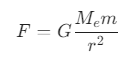
Even a small increase in r leads to a decrease in the gravitational force (F). For instance, if you were at the top of Mount Everest, you would weigh slightly less than you would at sea level because you are further from the bulk of Earth’s mass.
Local Geological Variations
Finally, the density of the Earth’s crust is not uniform. Different regions have different concentrations of heavy metals, minerals, or varying thicknesses of the crust. Places with denser underground rock or large mountain ranges (like the Himalayas) exert a slightly stronger gravitational pull than regions over deep ocean trenches or areas with less dense sedimentary rock. These “gravity anomalies” are often so small they require sensitive instruments called gravimeters to detect, but they confirm that the Earth’s pull is a complex, ever-changing map rather than a single constant.