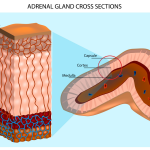
Aldosterone is primarily produced in the adrenal glands, which are small, triangle-shaped organs located directly on top of each kidney. Specifically, it is synthesized in the adrenal cortex, the outer layer of these glands. This cortex is divided into three distinct functional zones, and aldosterone is produced in the outermost layer known as the zona glomerulosa. This specific localization ensures that the body can compartmentalize the production of different steroid hormones, as the inner layers are responsible for creating cortisol and androgens instead.
The production of aldosterone begins with cholesterol as the base precursor. Through a series of enzymatic reactions, cholesterol is converted into various intermediates before finally being transformed into aldosterone by the enzyme aldosterone synthase (CYP11B2). This enzyme is unique to the zona glomerulosa, which is why this hormone is not produced in other parts of the adrenal gland. Once synthesized, the hormone is released directly into the bloodstream to perform its role as a mineralocorticoid, helping the body retain sodium and water.
The release of aldosterone is tightly regulated by several physiological signals, most notably the renin-angiotensin-aldosterone system (RAAS) and the concentration of potassium in the blood. When the kidneys detect low blood pressure or low sodium levels, they release an enzyme called renin, which eventually triggers the production of Angiotensin II. This molecule then binds to receptors in the zona glomerulosa to stimulate aldosterone secretion. Additionally, high levels of serum potassium can directly trigger the adrenal cells to produce more aldosterone to help the kidneys excrete the excess through urine.