If you flip through a modern Bible looking for the word “dinosaur,” you won’t find it—the word wasn’t even coined until 1841, thousands of years after the scriptures were written.
How the Bible accounts for dinosaurs depends entirely on who you ask. Because the text doesn’t explicitly name them, Christians and biblical scholars generally fall into two main camps on this topic.
The Young-Earth Creationist View (Literal Interpretation)
Young-Earth Creationists believe the earth is roughly 6,000 to 10,000 years old and that Genesis describes literal 24-hour days of creation. In this view, dinosaurs and humans lived at the same time.
- Day Six Creation: Genesis 1 states that God created all land animals and humans on Day Six. Creationists argue this means dinosaurs were made alongside Adam and Eve.
- Noah’s Ark: They believe pairs of young dinosaurs boarded the Ark with Noah and survived the global flood, eventually going extinct later due to environmental shifts or being hunted.
- The “Behemoth” and “Leviathan”: To support this, creationists point to the book of Job, where God describes two massive, terrifying creatures to show Job His power:
| Creature | Biblical Description (Job 40-41) | Creationist Identification | Traditional/Academic View |
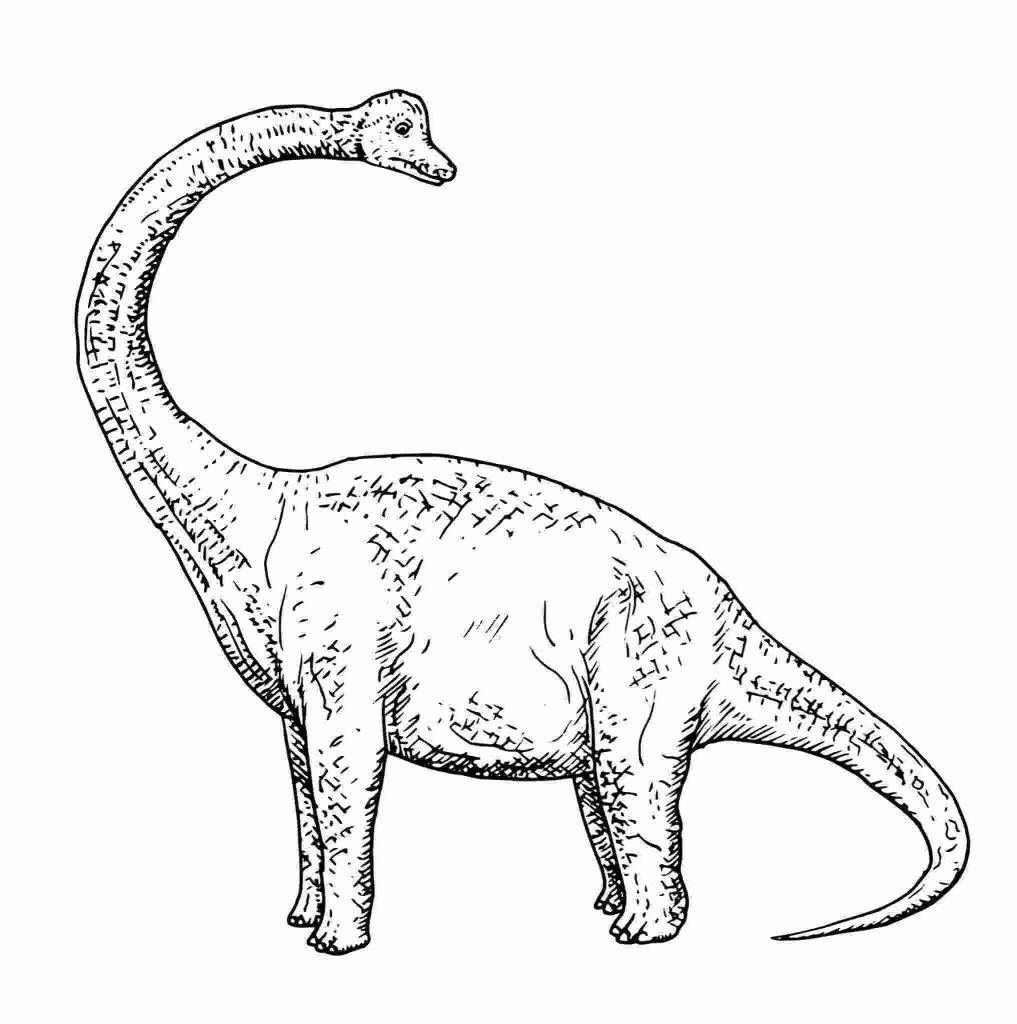
| Behemoth | An herbivore with bones like “tubes of bronze” and a “tail like a cedar tree.” | A Sauropod (long-necked dinosaur like a Brachiosaurus) | A Hippopotamus or Elephant (with the “tail” possibly meaning a trunk or being a poetic exaggeration) |
| Leviathan | A terrifying, armored sea monster that breathes fire and is impervious to human weapons. | A Chronosaurus or Mosasaur (ancient marine reptile) | A Crocodile, or a symbol of ancient near-eastern chaos myths |
1. Does the word “dinosaur” appear anywhere in the Bible?
No, the word “dinosaur” does not appear in any translation of the Bible. To understand why, we have to look at the timeline of language. The Bible was completed nearly two thousand years ago, written originally in ancient Hebrew, Aramaic, and Greek. The word “dinosaur” is a modern invention, coined in 1841 by a British paleontologist named Sir Richard Owen. He combined the Greek words deinos (meaning terrible, powerful, or wondrous) and sauros (meaning lizard) to describe the massive fossilized bones being unearthed in England. Because the word didn’t exist when the Bible was written or when the King James Version was translated in 1611, ancient translators used terms native to their eras. Depending on the biblical perspective you look at, either dinosaurs are referenced using ancient descriptive vocabulary like “dragons” or “beasts,” or they simply weren’t relevant to the theological message the ancient authors were inspired to communicate to their original audience.
2. When does the Bible say dinosaurs were created?
The answer to this question depends entirely on how a reader interprets the timeline of Genesis chapter 1.
- Young-Earth Creationists believe that God created the universe in six literal, 24-hour days roughly 6,000 to 10,000 years ago. In this view, land-dwelling dinosaurs were created on Day Six along with all other land animals and human beings, meaning humans and dinosaurs walked the earth simultaneously. Water-dwelling reptiles (like plesiosaurs) and flying reptiles (like pterodactyls) would have been created on Day Five.
- Old-Earth Creationists and Theistic Evolutionists interpret the “days” of Genesis as long figurative epochs or allegorical frameworks. They agree with modern scientific consensus that dinosaurs were created hundreds of millions of years ago, dominating the landscape during the Mesozoic Era, and went extinct roughly 66 million years ago—long before the structural emergence of the first human beings on earth.
3. What is the “Leviathan” mentioned in Job 41, and is it a dinosaur?
Directly following the description of Behemoth, Job 41 introduces “Leviathan,” a terrifying sea creature that resists human capture. The passage describes a monster with impenetrable scales, crushing teeth, and eyes like the dawn. Most remarkably, verses 18–21 describe flashes of light, sparks of fire, and smoke pouring from its nostrils.
Young-Earth Creationists sometimes propose that Leviathan could have been a massive marine reptile, such as a Mosasaurus or Kronosaurus, or a giant armor-plated crocodile like Sarcosuchus. They argue the fire-breathing descriptions could refer to real chemical defense mechanisms, similar to a modern bombardier beetle but on a predatory scale.
On the other hand, secular historians and literary theologians identify Leviathan as a well-known multi-headed chaos monster from ancient Near Eastern mythology (similar to the Canaanite sea beast Lotan), used poetically by the author of Job to personify cosmic evil and chaos.
4. Why does the Bible use the word “dragon” so frequently?
In older translations of the Bible, such as the King James Version, the word “dragon” appears dozens of times across both the Old and New Testaments. In the Hebrew text, the word is often tannin, which translates broadly to a sea monster, serpent, or giant marine reptile. Young-Earth advocates argue that ancient “dragon legends” found across global cultures—including those in the Bible—are actually historical, collective human memories of real interactions with surviving dinosaurs before they vanished entirely. They suggest that before the 19th-century invention of paleontology, “dragon” was simply the standard word for giant, mysterious reptiles.
However, linguists and modern translators clarify that tannin is often used figuratively to describe desert predators like jackals, dangerous sea creatures like whales or crocodiles, or political enemies like Egypt and Babylon. In the New Testament, the Greek word drakon is explicitly used as symbolic imagery for Satan.
5. Did dinosaurs go onto Noah’s Ark during the global flood?
According to the Young-Earth Creationist model, Noah was commanded by God to bring two of every kind of land-dwelling, air-breathing animal onto the Ark, which would logically include dinosaurs. Creationist ministries explain the logistics by pointing out that Noah did not need to bring fully grown, massive adult dinosaurs like a 40-ton Argentinosaurus. Instead, God likely sent young, juvenile dinosaurs that were much smaller (perhaps the size of a sheep or a horse), ate significantly less, and had their entire reproductive lifespans ahead of them after leaving the Ark.
For Christians who hold to an Old-Earth perspective, this dilemma doesn’t exist. They believe dinosaurs were already extinct tens of millions of years before humans existed, or they interpret Noah’s flood as a localized regional event in Mesopotamia that wiped out humanity in that area rather than an absolute, literal planetary inundation.
6. What happened to dinosaurs after they left Noah’s Ark?
If dinosaurs were on the Ark, Young-Earth Creationists must explain why they are no longer roaming the earth today. Their primary explanation mirrors standard ecological principles: a drastically altered post-Flood world. They suggest the global flood triggered an immediate ice age, radically shifted climates, and destroyed the dense, lush vegetation that giant herbivores relied on to survive.
Additionally, they propose that surviving humans hunted dinosaurs for food, protection, or glory, eventually driving them to extinction just as humans have done to the dodo bird, the mammoth, and various predators throughout recorded history.
In contrast, mainstream science and Old-Earth theologians maintain that dinosaurs were wiped out by a massive asteroid impact combined with intense volcanic activity at the end of the Cretaceous Period, long before any ark would have been constructed.
7. Does the creation account in Genesis allow for millions of years of dinosaur history?
Old-Earth Christians argue that the structural language of Genesis absolutely leaves room for millions of years of dinosaur history through several distinct interpretations.
- One popular view is the Day-Age Theory, which proposes that the Hebrew word for day (yom) can mean a long, indefinite period of time, rather than a strict 24 hours. Under this view, the “days” correspond to major geological eras.
- Another perspective is Framework Hypothesis, which views Genesis 1 as a non-chronological, poetic literary structure designed to declare God as creator, not a science textbook detailing timelines.
- There is also the Gap Theory, which suggests a massive, millions-of-years gap of time occurred between Genesis 1:1 (“In the beginning God created…”) and Genesis 1:2 (“And the earth was without form and void”), during which the prehistoric world and dinosaurs existed before being destroyed prior to human creation.
8. Did dinosaurs suffer and die before human sin entered the world?
This is one of the most significant theological dividing lines between Young-Earth and Old-Earth Christians. Romans 5:12 states that sin entered the world through one man (Adam), and death through sin.
Young-Earth Creationists argue that if dinosaurs lived and died for millions of years before humans, then billions of creatures suffered, decayed, and got cancer long before Adam ever sinned. They claim this distorts the character of God, who declared His finished creation “very good” in Genesis 1:31.
Old-Earth theologians counter this by clarifying that Paul’s theology in Romans specifically addresses human spiritual and physical death, not animal death. They point out that biological systems depend on cell death, predators, and decay to function, and argue that animal death existed as a natural, non-moral part of the Earth’s ecosystem long before humanity’s moral fall.
9. Were dinosaurs originally meat-eaters in the Garden of Eden?
Genesis 1:30 states, “And to every beast of the earth… I have given every green herb for meat.” Based on this verse, Young-Earth Creationists teach that all animals, including apex predators like the Tyrannosaurus rex, were originally strictly vegetarian in the pristine Garden of Eden. They argue that sharp teeth and powerful claws were either designed ahead of time by an omniscient God who knew the Fall would happen, or that these biological features were used to tear open tough fruits, melons, and vegetation. In their view, carnivory only began after the Fall corrupted the natural order.
Mainstream paleontologists and Old-Earth theologians find this idea biologically unfeasible. Coprolites (fossilized dung) and stomach contents of dinosaurs clearly show evidence of digested bones and meat, and their entire anatomy—from stereoscopic vision to digestive tracts—is built exclusively for predation, proving they were carnivores long before humans existed.
10. How do Christians reconcile dinosaur fossils with the biblical timeline?
Christians navigate the physical reality of dinosaur fossils based on their underlying worldview. Young-Earth Creationists argue that the vast majority of sedimentary rock layers and fossil beds found across the planet were laid down rapidly during Noah’s global flood. They claim the violent, churning waters drowned and buried creatures sequentially based on their habitats, mobility, and density, creating the illusion of millions of years of evolutionary layers.
Old-Earth Creationists, however, fully accept standard radiometric dating methods used by geologists, which place dinosaur fossils between 245 and 66 million years old. They do not see these fossils as a threat to scripture; instead, they view them as a tangible, historical record of God’s magnificent creative work over immense periods of time, displaying a deeply complex history that preceded human stewardship.
11. Are there any hidden codes or descriptions of dinosaurs in prophetic books?
From a historical-critical standpoint, there are no hidden codes or descriptions of dinosaurs in the prophetic or apocalyptic books of the Bible (such as Daniel or Revelation). When these books describe bizarre creatures—like beasts with seven heads, iron teeth, or wings—they are explicitly utilizing apocalyptic imagery. In ancient Near Eastern literature, these composite beasts were political symbols used to represent oppressive empires, wicked rulers, or spiritual entities rather than biological animals.
While some imaginative internet theories try to link the multi-headed dragons of Revelation to prehistoric reptiles, mainstream theologians universally agree that treating these highly symbolic, theological visions as literal zoological accounts of dinosaurs misinterprets the entire genre of apocalyptic literature.
12. What does modern paleontology say about birds being living dinosaurs, and how does that fit the Bible?
Modern evolutionary biology asserts that avian dinosaurs did not completely go extinct, and that modern birds are actually living theropod dinosaurs.
For Young-Earth Creationists, this concept is rejected outright. They argue that God created birds on Day Five and land animals (including dinosaurs) on Day Six, meaning they belong to completely separate, immutable “created kinds” (min in Hebrew) that cannot cross evolutionary boundaries. They view anatomical similarities as a reflection of a common Designer using efficient engineering blueprints.
For Theistic Evolutionists, this scientific discovery fits comfortably within scripture. They believe that God used the natural processes of evolution over millions of years to craft life, meaning Genesis poeticizes the truth that God brought forth flying creatures, while science uncovers the beautiful, physical lineage showing how He did it.
13. Why doesn’t Genesis specifically name prominent animals like dinosaurs?
The Bible is fundamentally a book of ancient theology, covenant history, and spiritual instruction—it was never intended to be an all-inclusive catalog of earth’s zoological history. The human authors wrote to ancient Israelites to explain their relationship with God, using animals that were intimately familiar to them in the ancient Near East, such as sheep, goats, oxen, lions, and eagles.
Including a technical breakdown of Stegosaurus or Triceratops would have been completely meaningless to an ancient audience living in Canaan thousands of years before the advent of paleontology. The absence of dinosaurs in scripture is no more surprising than the absence of kangaroos, penguins, or bacteria; none of these organisms were relevant to the immediate spiritual and cultural message God was communicating to His people.
14. Is there a connection between biblical “Nephilim” and dinosaurs?
Genesis 6:4 mentions the “Nephilim,” often translated as giants or “fallen ones,” who existed on the earth in the days leading up to Noah’s flood. Over the years, fringe internet theories and alternative interpretations have attempted to link the Nephilim to dinosaurs, suggesting that either the Nephilim bred these monsters or that the term “giant” historically applied to both giant humans and giant reptiles.
However, there is absolutely no biblical, textual, or linguistic connection between the two. The text explicitly describes the Nephilim as human warriors, heroes of old, and men of renown born from relationships between the “sons of God” and the “daughters of men.” Conflating them with prehistoric reptiles is a modern invention completely unsupported by biblical scholarship.
15. How do “Apparent Age” arguments explain dinosaurs?
The “Apparent Age” or Omphalos hypothesis is a theological concept which proposes that when God created the universe, He created it with mature, functional systems that possessed the illusion of age. For example, Adam was created as a fully grown adult man, not an infant, and trees in Eden were created with tree rings already inside them.
Some creationists apply this concept to the fossil record, suggesting that God placed dinosaur bones directly into the earth’s strata during creation to give the planet a mature geological foundation, meaning the dinosaurs themselves never actually lived.
However, this argument is largely rejected by both secular scientists and most Christian theologians, who point out that creating a massive fossil record of animal death, healed fractures, and digested food without them actually existing would make God look deceptive.