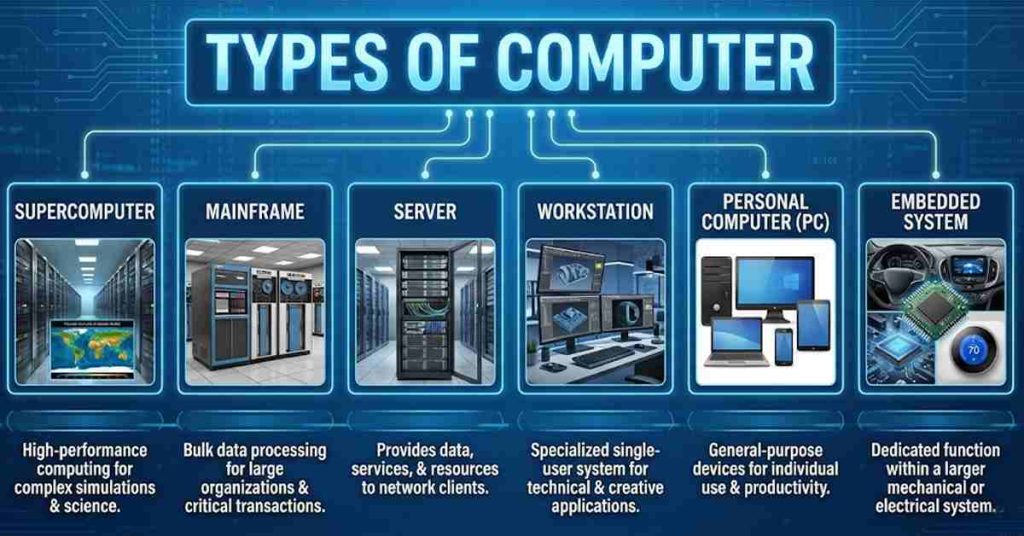
A node in computer networking is any physical or virtual device connected to a network that can send, receive, or forward data.
Every node needs a unique network identifier—such as a MAC address (hardware address) or an IP address (logical network address)—so data reaches the right destination.
Common Types of Network Nodes
- End devices (hosts): Devices where data originates or terminates, such as laptops, smartphones, desktops, printers, IP cameras, and smart TVs.
- Intermediary (infrastructure) devices: Hardware that directs, filters, or amplifies traffic between networks, including routers, switches, hubs, and access points.
- Servers and storage nodes: Dedicated machines or virtual instances that host websites, databases, files, or cloud applications.
- Blockchain / distributed ledger nodes: Computers that maintain copies of a ledger, validate transactions, and relay blocks across a peer-to-peer network.
Node vs. Host vs. Router
| Term | Meaning | Example |
| Node | Any addressable device attached to a network | Laptop, switch, router, smart TV |
| Host | A node running end-user or server applications (often excludes pure Layer-2 switches/hubs) | Web server, workstation, phone |
| Router | A specialized node that forwards packets between different networks | Home Wi-Fi router, core ISP router |
How Nodes Communicate
- A source node packages data into frames or packets containing the destination address.
- Intermediate nodes (like switches and routers) read addressing headers and select the next path toward the destination.
- The destination node receives the packets, verifies integrity, and reassembles the data for the application.